
Voices from the Field: Claire Raffel, Collective Climate Justice Fund and DAF Commons
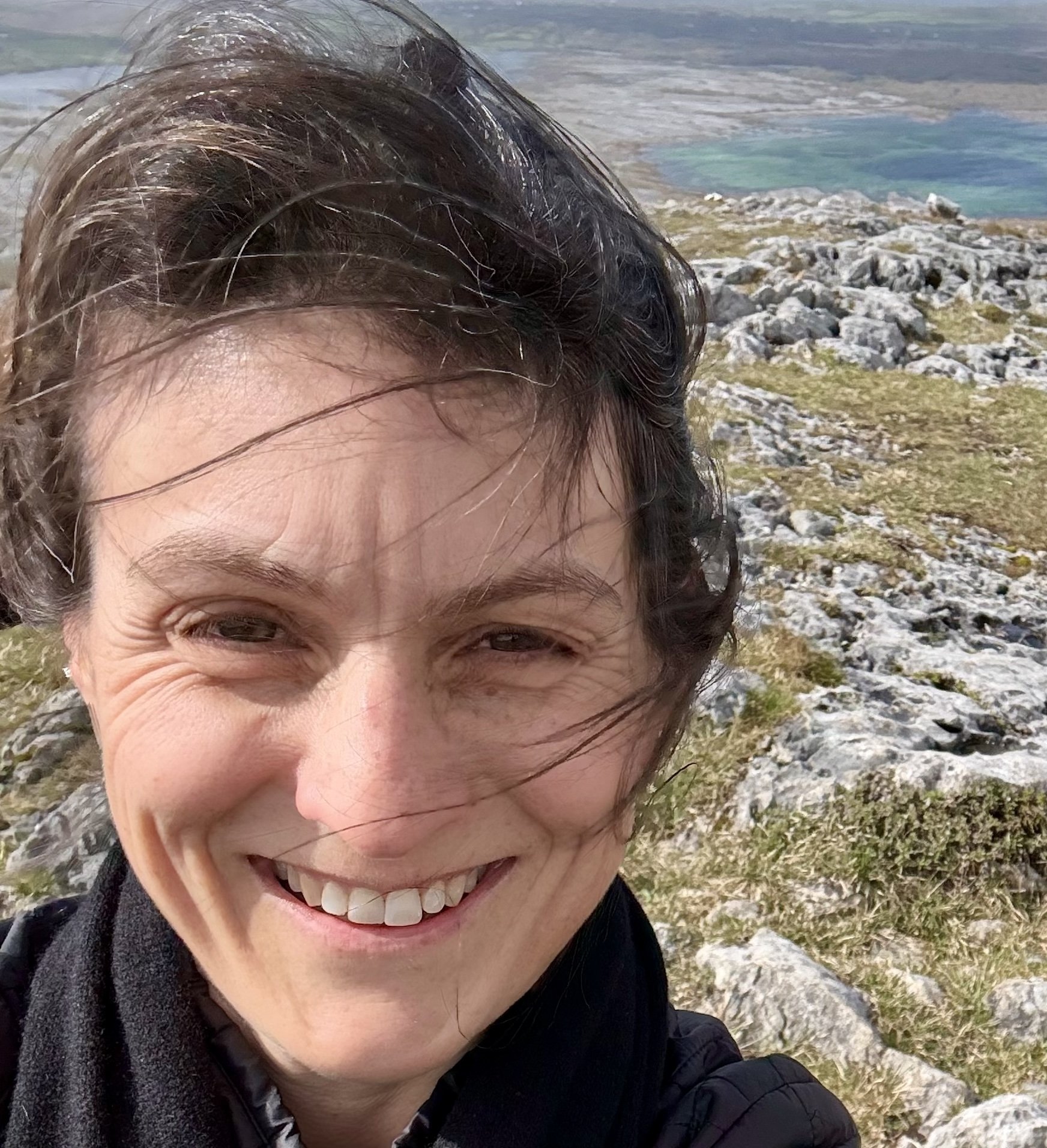
Our latest ‘Voices in the Field’ interview dives into the role of leveraging catalytic capital and putting the full spectrum of capital to work for deeper impact.
One of our partners and Invest for Better & Heading for Change climate and gender investing cohort member, Claire Raffel, shares her journey of creating a DAF and her vision for it. Claire and her husband Dave started a donor-advised fund looking to disburse grants, until they discovered they could use their DAF dollars even more impactfully: low-interest loans, recoverable grants, direct investments.
Claire realized the biggest risk wasn't a low return, it was inaction. That reframing led her to co-found the Collective Climate Justice Fund, pooling nearly $2.5M with fellow DAF holders into community-owned renewable energy.
Our Chief Catalyst Sana Kapadia has previously written about this shift in a blog for Confluence Philanthropy.
It's a story that echoes something Heading for Change's founder Suzanne Biegel understood deeply. A long-distance runner in the field of gender lens investing, Suzanne knew that this kind of work isn't done well in a single sprint - it takes practice, collaboration, and the willingness to keep going.
That same instinct shaped Heading for Change: deploying capital in a catalytic, impactful way to demonstrate that gender is not just relevant to climate investing, but a catalyst for new solutions, opportunities, and transformative impact. Our multi-faceted approach that combines investing, grant-making, advocacy, and field building is shining a light on holistic and systemic approaches needed
What has been your journey so far when it comes to moving money with a focus on climate justice and why does this focus matter in your context?
My husband Dave and I opened a DAF thanks to an unexpected inheritance in 2020. We knew immediately that we wanted to use it to support the energy transition — specifically to help communities on the front lines of the climate crisis build and own their own renewable energy. But we started where most people start: thinking about grantmaking, because that's what we knew.
The aha moment came when we learned from a family friend that we could do more than just make grants with our DAF. She led us to ImpactAssets, where we started learning that we could use all of the DAF dollars in our account for good — as grants, low-interest loans, recoverable grants, direct investments in funds. We also came to appreciate that once we put the money in a DAF account it wasn’t ours anymore - it wasn’t paying for our kids’ college or for our mortgage - and so we could think about risk and return completely differently. For us, the biggest risk isn't a “bad” investment return, in fact we love a low or zero interest return that keeps money in communities instead of generating fees for a brokerage account. Instead, the biggest risk for us is not acting with enough urgency. It's watching communities that have contributed least to the climate crisis bear the brunt of its consequences, while capital sits on the sidelines waiting for the perfect moment.
Another experience we had along the way was the feeling of isolation that came with trying to figure out how to invest DAF capital like this all by ourselves — not finding peers or infrastructure for learning together. This led me to co-found the Collective Climate Justice Fund and, eventually, the DAF Commons. The CCJF brought together a group of DAF holders to pool capital for investments in a just energy transition. By the end of this year we'll have invested almost $2.5M across 10 investments in community-owned and community-led renewable energy projects. What we've learned is that moving DAF capital together helps us feel less intimidated, more experimental, and allows us to have a lot more fun!
What excites you about Heading for Change and how has it sharpened the climate and gender finance nexus for you, especially as it relates to your work in climate justice?
“We need a new story about what DAFs are for and how they can do more good in the world. The “grow to give” narrative — let the money grow in the market until some future moment when you have more to give — keeps money in investments that may be opposed to our values ... As DAF holders, we collectively steward hundreds of billions of dollars that can do so much good, in so many ways right now. This money is already committed to doing good, it’s legally not ours anymore, it doesn’t need market rate returns, and the biggest risk is inaction. ”
I was first drawn to Heading for Change because of the model itself. This was before we started the CCJF. The idea of pooling DAF capital with other DAF holders — to meet minimums I couldn't hit alone, to access funds I'd never find on my own, and to learn alongside peers who were asking the same questions I was — was exactly what I'd been looking for. It's the same impulse that led me to co-found the CCJF, and finding a fund that had already built that infrastructure was exciting.
Once I was part of the community, I was so impressed by Heading for Change’s generosity in terms of sharing what they’re learning and building. The transparency about how the fund works, the tools and resources they've made available to anyone who wants to do this kind of investing is all so inspiring. Most funds protect their knowledge. Heading for Change shares it, which feels so aligned with the community ethos.
And of course, I was drawn to what Heading for Change invests in. The communities most vulnerable to climate harm and most powerful as leaders of climate solutions are disproportionately women and gender-diverse people, and I am inspired to move money into enterprises led by them, alongside my peers.
Can you share an example from your portfolio that illustrates your investment thesis in practice?
Our first direct deal was an investment in Anpetu Wi, which will be the first utility-scale wind farm on Tribal land, located on the Standing Rock Reservation on the North and South Dakota border. We made both a 1% interest loan and an unrestricted grant to the project, which is being developed by SAGE Development Authority to build generational wealth for the tribe, alongside clean energy.
This investment represents everything I believe about what DAF capital should be doing. It's going directly to a community that has been on the front lines of both the climate crisis and the fossil fuel industry's harms. It's building community wealth, ownership, local jobs, and ample clean energy. And it required the kind of patient, flexible, below-market capital that DAF dollars are uniquely positioned to provide, and that has the potential to unlock commercial and government investment down the road.
What might help move the field forward and unlock more capital at scale?
First of all, we need a new story about what DAFs are for and how they can do more good in the world.The "grow to give" narrative — let the money grow in the market until some future moment when you have more to give — keeps money in investments that may be opposed to our values. We may care about climate, but our DAF may be invested in the fossil fuel industry.
The new story is that as DAF holders, we collectively steward hundreds of billions of dollars that can do so much good, in so many ways - granting and impact investing - right now. This money is already committed to doing good, it's legally not ours anymore, it doesn’t need market rate returns, and the biggest risk is inaction.
To start telling this story - and making it come to life —DAF holders need more opportunities to build peer connections. As fellow DAF holders, we can share what’s working and what’s not, and ask for help when we meet challenges. We’ll also need the infrastructure to help move us from inspiration to action. This includes DAF sponsors who make this kind of values-aligned investing the default, not the exception, as well as easy ways to get started with impact investing, like more multi-donor funds. The DAF Commons is part of this new story. We’re building a collective space for DAF holders seeking to do more good with their DAF dollars in community with their peers.